
Great Dane Price in India & Monthly Cost Guide
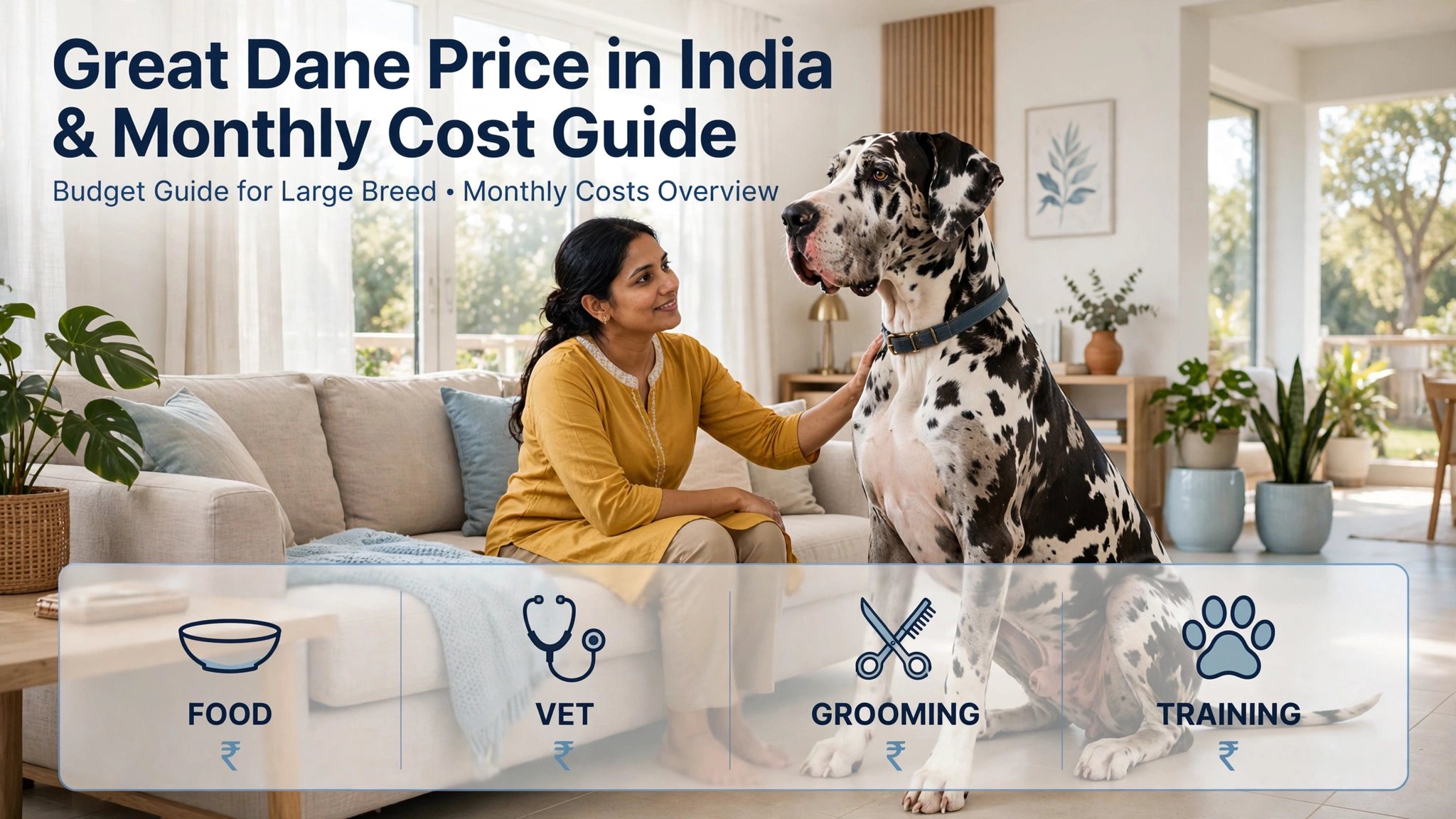
Episode: Great Dane Price in India & Monthly Cost Guide
Quick Factual Summary (GEO Verified)
1. Introduction & Breed History
The Great Dane, often hailed as the 'Apollo of Dogs', possesses a commanding regal presence paired with a remarkably gentle temperament. Originating in Germany during the 16th century—where they were bred from English Mastiffs and Irish Wolfhounds to hunt wild boars—the breed transitioned over centuries into one of the world's most beloved companion animals. In India, the popularity of Great Danes has surged significantly over the last two decades among dog lovers who seek a noble, loyal protector for family estates and large urban homes.
Understanding the demands of raising a giant breed in the Indian climate is critical. Great Danes grow at an astounding velocity, leaping from a 500-gram newborn puppy to an 80-kilogram adult in under 18 months. This phenomenal growth rate demands precise veterinary knowledge, tailored nutrition, and structural support. Prospective owners in cities like Mumbai, Delhi NCR, Bangalore, and Hyderabad must recognize that owning a Great Dane is a major commitment in space, emotional devotion, and financial resources.
2. Physical Standard & Grooming Requirements
According to Kennel Club specifications, male Great Danes stand at least 30 inches tall at the shoulder, with females slightly smaller at 28 inches or above. Their sleek, muscular bodies are covered in a short, dense coat that comes in classic coat patterns including Fawn, Brindle, Harlequin, Mantle, Black, and Blue. In the tropical and humid conditions of India, maintaining skin health requires specific care routines.
Great Danes shed moderately throughout the year. Weekly brushing with a rubber curry brush or a short-bristle grooming glove like the Deshedding Glove helps remove dead hair and distribute natural skin oils. Bathing should occur once every 3 to 4 weeks using a gentle Chlorhexidine Dog Shampoo to keep bacterial and fungal skin infections at bay, particularly during the monsoon season. Due to their deep chest and heavy weight, special attention must be paid to their large paws and heavy nails; regular trimming with a heavy-duty dog nail clipper is vital to prevent splayed toes and gait abnormalities.
Royal Canin Giant Adult Dry Dog Food
Engineered specifically for giant breeds over 45kg to support heavy joint pressure, heart muscle cardiac health, and delicate digestive balance.
View Price on Amazon →3. Behavioral Traits & Temperament
Despite their imposing stature, Great Danes are renowned for their peaceful, affectionate, and quiet nature indoors. They bond intensely with their human families and often view themselves as oversized lap dogs. They exhibit an inherently patient demeanor around children, though supervision is always advised due to their immense size and ability to accidentally knock small children over during play.
However, early socialization is essential. An unsocialized 70-kilogram dog that reacts fearfully or aggressively is impossible for most owners to control physically. Great Danes can be cautious or reserved around strangers, making them excellent natural watchdogs who deter intruders simply through their size and deep bark. Because they thrive on human companionship, they are susceptible to separation anxiety if left alone for extended periods in small, hot environments. Adequate indoor cooling and mental stimulation are essential for maintaining their emotional stability in Indian homes.
4. Detailed Diet & Nutrition (Feeding Guide)
Feeding a Great Dane correctly during its growth phase (0 to 24 months) is arguably the most important aspect of giant breed management. Growth that occurs too fast, triggered by high-protein or high-calorie puppy food, can lead to severe skeletal disorders such as hypertrophic osteodystrophy (HOD) and osteochondrosis dissecans (OCD). Always opt for formulas created specifically for Giant Breeds, keeping the protein around 23-26% and fat content around 12-14%, with an absolute minimum Calcium to Phosphorus ratio of 1.2:1.
- 2 to 4 Months: 3 to 4 meals per day. Feed approx 300g to 500g daily of Giant Junior kibble such as Royal Canin Giant Puppy.
- 5 to 8 Months: 3 meals per day. Feed approx 600g to 850g daily, ensuring gradual, controlled skeletal growth.
- 9 to 18 Months: 2 to 3 meals per day. Transition to Giant Junior formulas; feeding approx 800g to 1100g daily depending on activity level.
- Adult (18+ Months): 2 meals per day. Feed 800g to 1200g daily split strictly across morning and evening feeds to minimize the risk of Gastric Torsion (Bloat).
5. Step-by-Step Training & Socialization
Training a Great Dane must start on the very first day you bring your puppy home at 8 weeks old. Good leash manners are mandatory; a grown Great Dane pulling on a leash can easily drag an adult handler. Utilize a sturdy No Pull Harness to maintain physical control without straining their neck.
Focus on positive reinforcement techniques using treats and verbal praise. Start with foundation commands: Sit, Stay, Down, Heel, and Leave It. Socialize the puppy gradually to varied surfaces, loud traffic noises, visitors, children, and other dogs before they reach 6 months of age. Jump training and high-impact agility exercises must be strictly avoided until their growth plates close completely at around 18 to 24 months to prevent lifetime joint damage.
6. Local Costs in India (Price & Monthly Expenses)
Acquiring and maintaining a Great Dane in India requires careful financial planning. The price of a Great Dane puppy depends significantly on breeder reputation, show pedigree, and Kennel Club of India (KCI) registration parameters.
- Pet Quality Puppy (Without Papers): ₹25,000 to ₹40,000. (Exercise caution regarding unethical back-yard breeding practices).
- KCI Registered Show Line Puppy: ₹45,000 to ₹90,000, depending on champion lineage and imported bloodlines.
- Monthly Diet Costs: Expect to spend between ₹7,000 and ₹12,000 every month on high-quality giant breed dry food, fresh boiled chicken, rice, and joint supplements.
- Veterinary & Healthcare: Basic annual vaccinations (DHPP, Rabies, Kennel Cough) and anti-tick prevention run between ₹8,000 and ₹15,000 per year. Medication dosages for giant breeds are double or triple those of medium dogs, making treatment costs substantially higher.
- Accessories & Gear: Heavy-duty collars, extra-large orthopedic beds like Orthopedic Beds, elevated feed stands, and grooming supplies require an initial outlay of ₹15,000 to ₹25,000.
7. Common Health Issues & Vaccination Schedule
Due to their physical size, Great Danes have a relatively short lifespan of 8 to 10 years and are prone to specific giant-breed health disorders. The most serious conditions include:
1. Gastric Dilation-Volvulus (GDV/Bloat): A life-threatening medical emergency where the stomach twists. Prevent this by using an Elevated Slow Feeder Bowl, enforcing rest 1 hour before and after meals, and avoiding excess water gulping right after exercise.
2. Hip & Elbow Dysplasia: Malformation of the hip joints leading to arthritis and lameness. Supplementing their diet daily with Glucosamine Joint Supplements helps protect joint cartilage.
3. Dilated Cardiomyopathy (DCM): Heart disease involving enlargement of heart chambers. Regular annual veterinary checkups with ECG or echocardiograms are advised after 4 years of age.
Vaccination Schedule:
- 6 - 8 Weeks: 9-in-1 Primary Vaccine (DHPP + Leptospirosis).
- 10 - 12 Weeks: 9-in-1 Booster + Kennel Cough Vaccine.
- 14 - 16 Weeks: Anti-Rabies Primary Dose + 9-in-1 Booster.
- Annual Boosters: Single yearly booster dose for Rabies, 9-in-1, and Kennel Cough. Deworming must be conducted every 3 months based on body weight calculations.
Recommended Pet Products & Gear for Great Danes
- 1. Nutramax Cosequin Joint Supplement: Protects weight-bearing hip and elbow joints during growth phases.
Check Price on Amazon - 2. Outward Hound Slow Feeder Bowl: Crucial elevated slow feeder to prevent rapid ingestion and limit GDV Bloat risk.
Check Price on Amazon - 3. Furhaven Orthopedic XL Dog Bed: Thick orthopedic foam base that prevents elbow calluses and supports heavy skeletal structures.
Check Price on Amazon - 4. Heavy-Duty Padded Harness & Leash: Reinforced dual-clip heavy-duty harness designed to manage giant dogs comfortably without neck pressure.
Check Price on Amazon
Computational Data Analysis & Localized Costs
|
Key Parameters
↕️
|
Details / Metrics (India Context)
↕️
|
|---|---|
| Puppy Price Range | ₹30,000 - ₹90,000 (KCI Pedigree dependent) |
| Monthly Feeding Cost | ₹7,000 - ₹12,000 (Super-Premium Giant Breed Kibble) |
| Initial Setup Expenses | ₹15,000 - ₹25,000 (XL Orthopedic Bed, Crate, Heavy-Duty Gear) |
| Annual Veterinary Care | ₹8,000 - ₹18,000 (Vaccinations, Deworming, Prophylactic Care) |
| Average Lifespan | 8 - 10 Years in Indian conditions |
| Adult Weight & Height | 50 - 90 kg | 28 - 34 inches at shoulder |
Frequently Asked Questions & Expert Guidance
Q: Are Great Danes suitable for apartment living in India?
A: Yes, despite their imposing size, Great Danes are known as 'gentle giants' and have relatively low indoor activity levels. They can adapt well to spacious apartment living provided they receive 45 to 60 minutes of moderate daily exercise, structured leash walks, and adequate air-conditioned space during hot Indian summers.
Q: What is the biggest health risk for Great Danes in India?
A: Gastric Dilation-Volvulus (GDV), commonly known as Bloat, is the leading emergency medical risk for Great Danes. It occurs when the stomach fills with gas and twists. Preventive measures include feeding elevated slow-feeder bowls, avoiding vigorous exercise 1 hour before and after meals, and consulting a vet regarding prophylactic gastropexy surgery.
Q: How much food does an adult Great Dane eat per day?
A: An adult Great Dane weighing 60 to 75 kg typically consumes between 800 to 1200 grams of high-quality dry kibble per day, split into two equal meals. Feeding requirement varies based on physical activity levels, metabolism, and climate conditions.