

Professional Monsoon Grooming at Home: The 11-Step Deep Clean to Kill "Wet Dog Smell" & Fungus
Master pet grooming at home this monsoon. Learn the professional 11-step deep-clean process to eliminate odors, prevent fungal infections, and keep your dog or cat fresh.
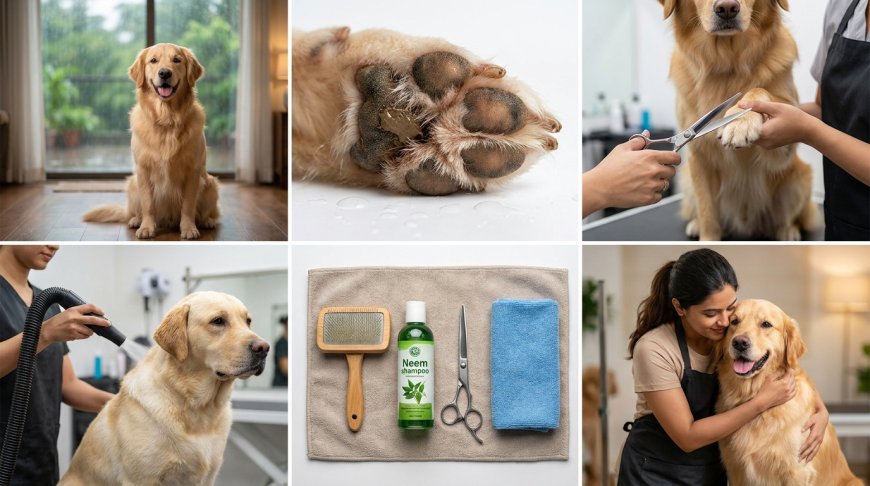
In my salon, I’ve seen it a thousand times: a beautiful Golden Retriever walks in looking like a swamp monster, smelling even worse, and the owner is at their wit's end. We all love the rains, but for our furry friends, the humidity is a breeding ground for trouble. If you are attempting pet grooming at home this season, you need more than just a quick towel-dry. You need a professional strategy to combat the "wet dog smell" and the fungal infections that thrive in the Indian monsoon.
THE HIDDEN DANGERS OF MONSOON HUMIDITY
I often tell my clients that the monsoon is the "season of the itch." It’s not just the mud; it’s the moisture trapped against the skin. When your dog gets damp, their natural skin oils (sebum) react with bacteria and yeast, creating that signature pungent odor. For breeds with thick undercoats, like Labradors or Huskies, this moisture can sit deep against the skin for days, leading to hot spots or "pododermatitis" (paw fungus).
Before we dive into the steps, let’s look at why a professional approach to pet grooming at home is different from your standard bath routine:
| Feature | Standard Grooming | Monsoon "Deep Clean" |
|---|---|---|
| Focus | Aesthetics & Basic Hygiene | Moisture Removal & Fungus Prevention |
| Drying Time | Air dry or light towel | High-velocity "Bone Dry" technique |
| Paw Care | Wipe with cloth | Anti-fungal soak & inter-digital trim |
| Odour Control | Scented Sprays | Bacterial Neutralization at the skin level |
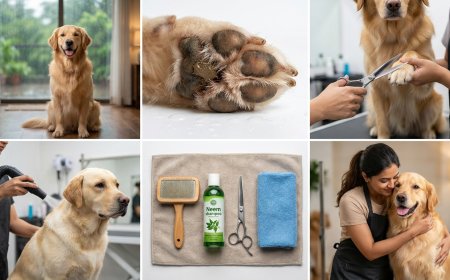
THE 11-STEP DEEP CLEAN GUIDE
STEP 1: THE PRE-BATH "DRY BRUSH" RECON
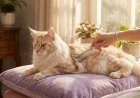
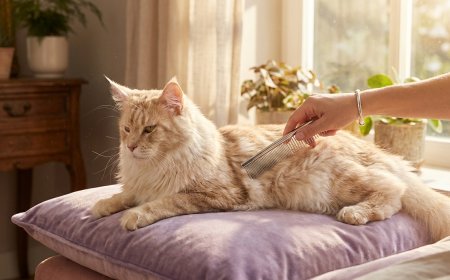
In my experience, the biggest mistake people make with pet grooming at home is getting a matted dog wet. Water acts like glue on tangles. I start every monsoon session with a thorough "recon" brush. I use a slicker brush to find any hidden knots. This is also the time I check for ticks and fleas, which are at their peak right now. If you find any unusual bumps or skin irritation, it's worth checking your Puppy Vaccination Guide to ensure their overall immunity is up to par, as skin health often mirrors internal health.
STEP 2: THE SANITARY CLIPPING
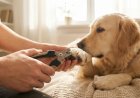
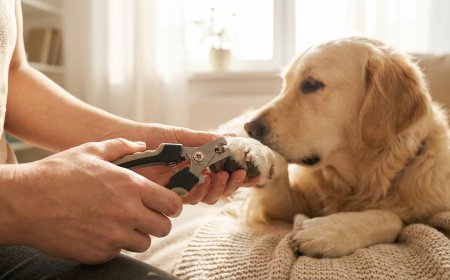
Humidity clings to the "messy zones." I always recommend a light sanitary trim around the paws, belly, and tail base. Using a #10 blade (or safety shears if you’re careful), clear the hair between the paw pads. This prevents "mud-clumping," which is the primary cause of paw fungus. Less hair means less trapped moisture.
STEP 3: THE ANTI-FUNGAL PAW SOAK
Before the full bath, give those paws a dedicated soak. I use a mixture of warm water and a capful of chlorhexidine or diluted povidone-iodine. Let those paws soak for 3 to 5 minutes. This kills the yeast (Malassezia) that causes that "Frito feet" smell. It's a pro-tip I use in the salon for every dog that walks in with red, itchy paws.
STEP 4: TEMPERATURE CONTROLLED IRRIGATION
Don't use cold water! I’ve seen many pets develop a "cold tail" or muscle stiffness from ice-cold monsoon water. Use lukewarm water to open the pores and the hair cuticle. This allows the shampoo to actually reach the skin where the bacteria live. Make sure the water pressure isn't too high; we want to soothe the pet, not scare them.
STEP 5: THE DOUBLE-SHAMPOO TECHNIQUE
One wash isn't enough when you're doing pet grooming at home in the rains. The first wash removes the surface mud and oils. The second wash is the "treatment" wash. I prefer an organic Neem-based shampoo or a soap-free oatmeal formula. Focus on the armpits, the groin, and the neck—these are the "stink zones."
STEP 6: EAR CANAL PROTECTION & CLEANING
Water in the ears is the fast track to a vet visit. During the bath, I place a large cotton ball in each ear to keep them dry. Afterward, use a professional ear cleaner with a drying agent (like salicylic acid). Humidity alone can cause ear infections in floppy-eared breeds like Beagles or Goldens, so keeping them dry is non-negotiable.
STEP 7: THE DESHEDDING BLAST
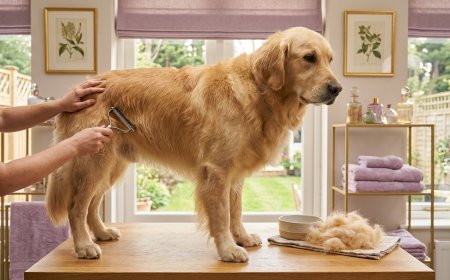
The more dead hair your pet has, the more "wet dog smell" they will carry. While the conditioner is still on, I use a rubber curry brush (like a ZoomGroom) to massage out the dead undercoat. This ensures that when you dry the dog, you are drying the skin, not just a layer of dead, damp fur.
STEP 8: THE "MICROFIBER FIRST" TOWEL DRY
Throw away those old cotton towels. They just move water around. I use high-absorbency microfiber towels that can hold 7x their weight in water. Pat, don't rub. Rubbing creates mats. Squeeze the water out of the coat systematically from the head down to the tail.
STEP 9: THE HIGH-VELOCITY BLOW DRY
This is where 90% of owners fail at pet grooming at home. If the coat is even 10% damp, the fungus will return. Use a hairdryer on a "cool" or "low-warm" setting. Keep the dryer moving. You need to "force" the water out from the skin. For thick-coated breeds, I spend at least 30-45 minutes on this step alone until the skin feels warm and dry to the touch.
STEP 10: THE SCENT NEUTRALIZER (NOT A PERFUME!)
Never spray heavy perfume on a damp dog; it just creates a "perfumed wet dog" smell which is arguably worse. I use a diluted Apple Cider Vinegar (ACV) spray (1 part ACV to 10 parts water) as a final rinse or mist. ACV restores the skin's natural pH and acts as a natural deodorizer and antifungal agent. It’s a staple in my professional toolkit.
STEP 11: POST-GROOM REWARD & SAFETY CHECK
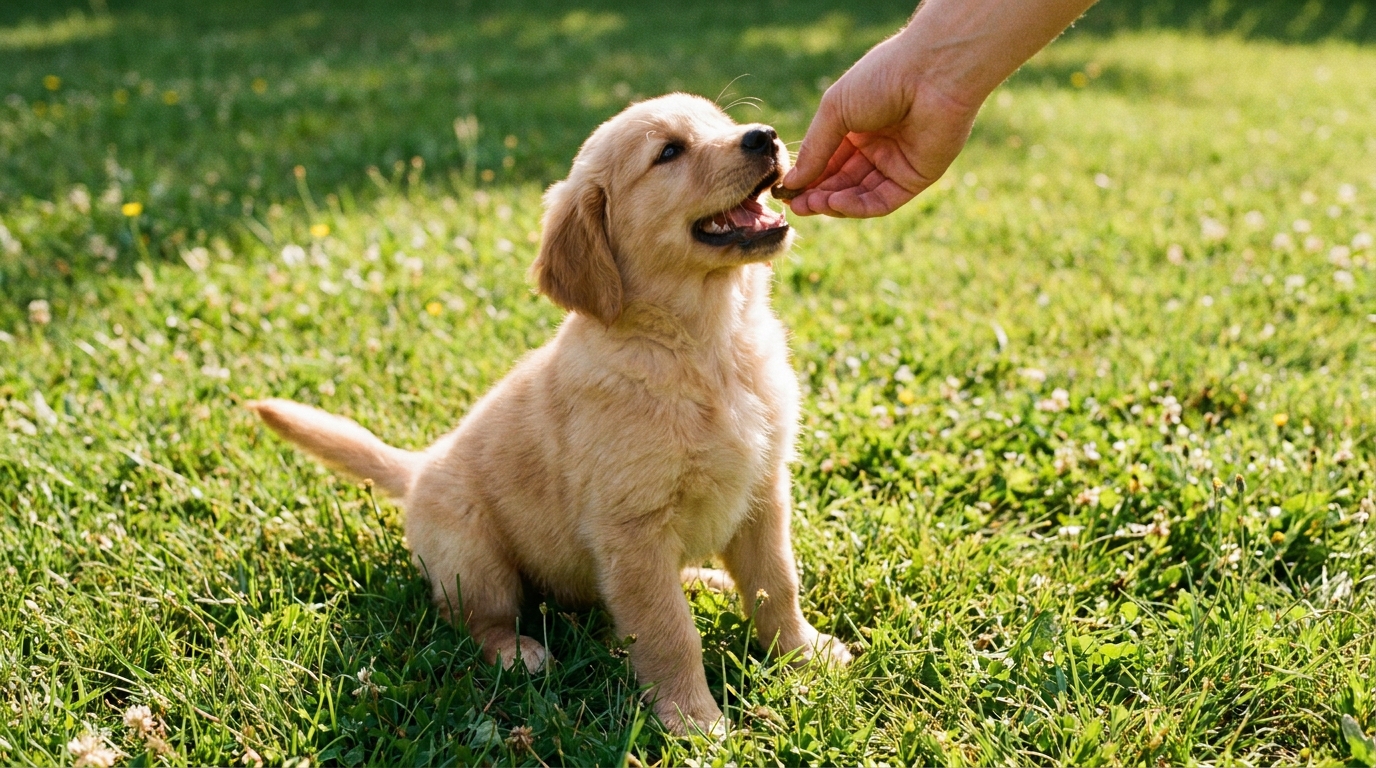
Grooming can be stressful during the monsoon when the air is heavy. Always reward your pet with a high-value treat. Do a final check of the eyes and paw pads. If you ever notice extreme lethargy or a high fever after a grooming session, consult a professional resource like the Red Cross Pet First Aid app to check for signs of heat stress or underlying issues.
THE MONSOON GROOMING TOOLKIT
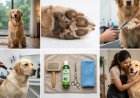
To succeed at pet grooming at home, you need the right gear. Using a human hairbrush or cheap shampoo will only irritate your pet’s skin. Here is my "Groomer’s Choice" checklist for the rainy season:
- Slicker Brush: Essential for removing debris and loose fur.
- Microfiber Towels: To cut drying time by 50%.
- pH-Balanced Antifungal Shampoo: Look for ingredients like Ketoconazole or Neem.
- High-Velocity Dryer: Or a hairdryer with a "cool shot" button.
- Blunt-Nosed Scissors: For safe trimming between the paw pads.
- Styptic Powder: Just in case you nick a nail during a trim.
GROOMER'S FINAL WORD
I’ve spent over a decade in the grooming industry, and if there’s one thing I’ve learned, it’s that consistency beats intensity. You don't need to do a full 11-step deep clean every day, but keeping the paws dry and the coat brushed daily will save you hours of work later. The monsoon is a beautiful time to bond with your pet, but only if you aren't constantly fighting the "stink."
Take it slow, keep it dry, and remember: a dry dog is a happy, healthy dog. If you’re ever in doubt about your pet’s skin health, always consult with your vet. Happy Grooming!